
Family Fun & Early Strategy with Chinese Checkers
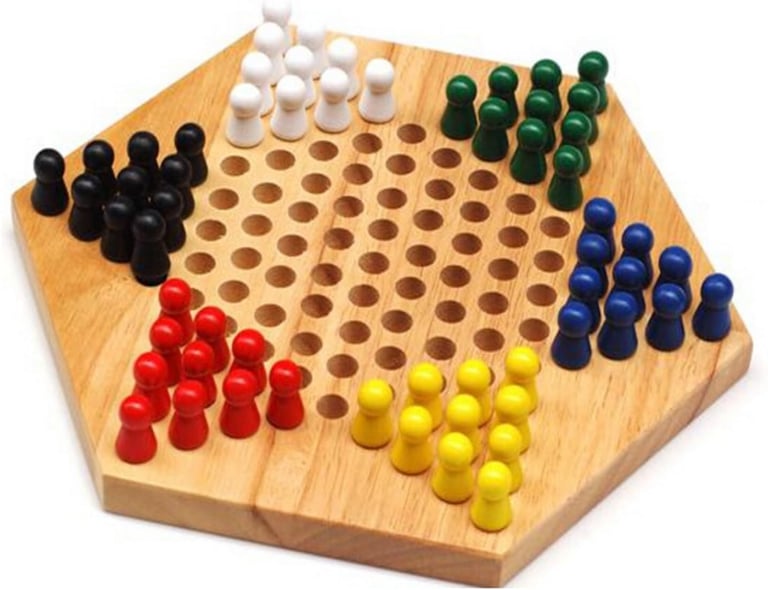
Board games are more than fun, they’re opportunities for children to grow, think, and connect. One classic choice is Chinese Checkers, a colorful hexagon board game with simple rules and big developmental benefits.
SCHOOL AGE
1/21/2026
Language & Communication
As children play together, conversation naturally emerges:
“Where should I move next?”
“Can I hop over your piece?”
This encourages expressive language, turn-taking in conversation, and shared dialogue about planning and rules .All key parts of early communication development.
Age-Appropriate for Young Players
This version of Chinese Checkers is suitable for children ages 3 and up, making it a flexible game for preschoolers through older kids. Younger children enjoy moving the bright pegs across the board, while older children can begin to understand strategy and plan their moves. The game is designed for 2–6 players, so it’s perfect for siblings and family game nights.
Cognitive Development: Planning, Strategy & Reasoning
At its heart, Chinese Checkers is a strategy board game. Players take turns moving pegs one space or hopping over other pegs toward opposite points of the board , the goal is to move all your pegs to the opposite triangle before others do. This kind of play encourages children to think ahead, anticipate outcomes, and make choices based on strategy, all of which support problem-solving and executive function skills.
Physical (Fine Motor) Skills
Moving small pegs across the hexagon board supports fine motor control and hand–eye coordination. For younger children especially, the tactile practice of picking up and placing pieces strengthens muscles needed for writing, drawing, and everyday tasks.
Social-Emotional Growth
Board games naturally build patience, cooperation, and emotional regulation: children learn to wait their turn, handle setbacks with grace, and celebrate each other’s successes. Chinese Checkers offers a low-stakes, playful environment where kids can practise managing excitement, frustration, and cooperation , important social-emotional skills for school and life.
Parent–Child Bonding Through Shared Play
Playing together turns simple moves into meaningful memories. Sit beside your child, strategize together, and narrate your thinking:
“Hmm… I think if we move this one here, it might help us jump faster!”
These shared moments become opportunities for encouragement, laughter, and connection.
Family game nights with Chinese Checkers aren’t just about winning ,they’re about learning together and strengthening relationships.